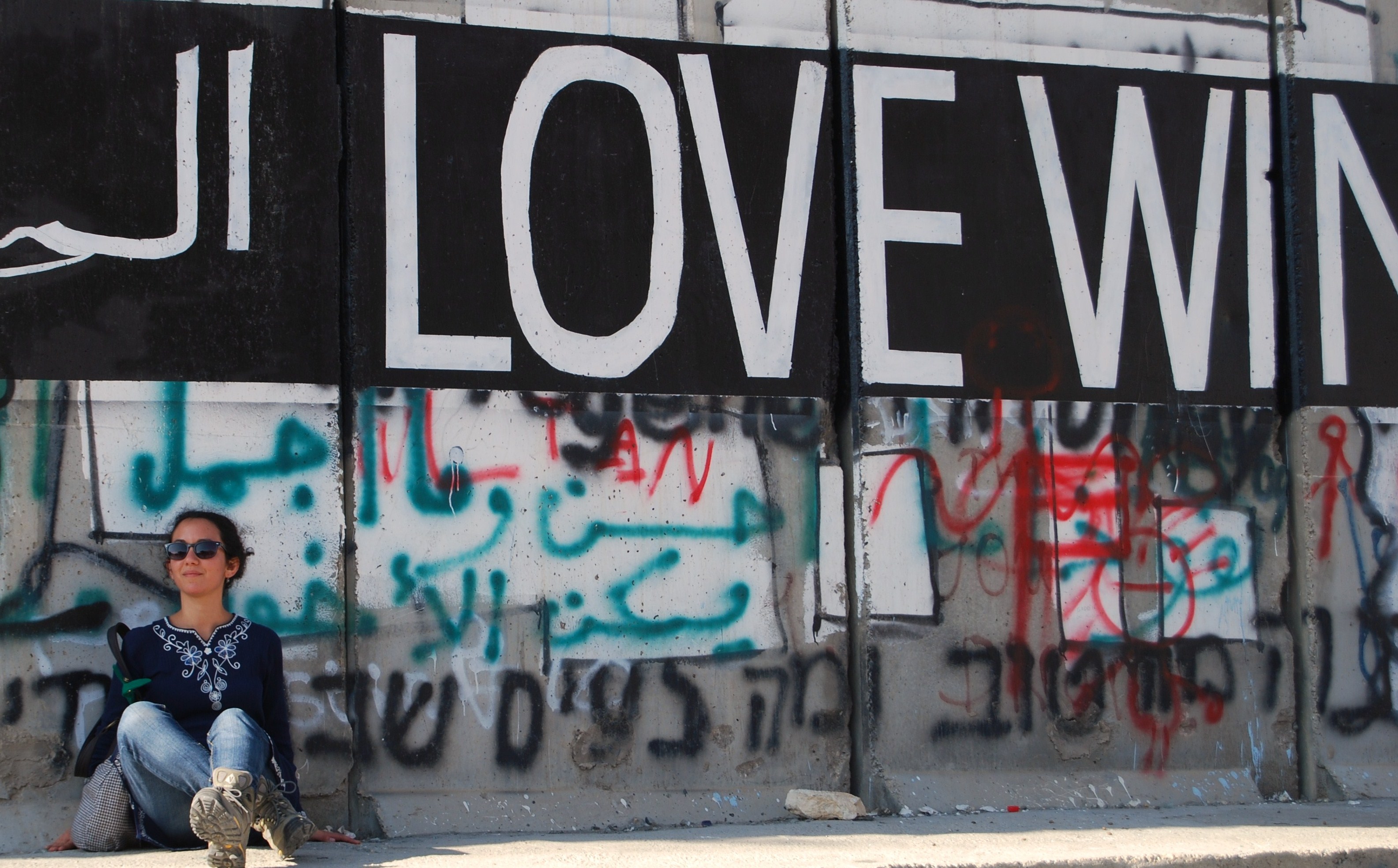
Wednesday, August 1, 2012

Tisha B’Av (9th of Av)


Throughout history, on the ninth day of the Jewish month of Av, many tragedies befell the Jewish people.  Both Temples were destroyed (655 years apart), the Bar Kokba revolt was crushed (322) and the Jews were expelled from Spain in 1492 (to name a few events).
Tisha B’Av begins at nightfall (like all Jewish holidays) and there is the custom of reading Eicha (the book of Lamentations) in synagogues while sitting on the floor.  Eicha is the beautiful and heart-wrenching verse composed by the prophet Jeremiah.
Here’s a sample:

1. How the Lord has covered the Daughter of Zion with the cloud of his anger
He has hurled down the splendor of Israel from heaven to earth; he has not remembered his footstool in the day of his anger.
2 Without pity the Lord has swallowed up all the dwellings of Jacob; in his wrath he has torn down the strongholds of the Daughter of Judah. He has brought her kingdom and its princes down to the ground in dishonor.
3 In fierce anger he has cut off every horn of Israel. He has withdrawn his right hand at the approach of the enemy. He has burned in Jacob like a flaming fire that consumes everything around it.

This year, Tisha B’av was actually held on the 10th of Av due to the fact that the 9th fell on Shabbat and we don’t fast on Shabbat. I began my fast about half an hour before Shabbat ended with a third meal with my roommates and friends. As soon as Shabbat ended, we headed off to hear Eicha being read.

Here’s where it gets interesting. I had heard about an “Eicha reading and walk around the Old City” that sounded interesting to me. I love historical tours I thought it would be really meaningful to go into the Old City on erev Tisha B’av. So I dragged some friends along to the Megillah reading (at Gan HaAtzmaut) to commence our evening. There were a lot of people out for the megillah reading and the atmosphere was really intense (in a good way). After Eicha was read (I followed along on my new Iphone), a few people started giving speeches and organizing the walk. A few Members of Knesset started talking about the tragedies of the Jewish people and how we no longer have the Temple which represents our weakness; a Rabbi from New York gave a speech about how the Jewish people will never be whole until we have the Temple again. People started getting riled up and the “walk” (which actually turned out to be a march) commenced.

The organizers started handing out Israeli flags and the riot police flanked out sides (some even rode on horses). A few of my friends picked up on the intensity of the situation and decided to bail, but a few of us wanted to stick it out and see what would happen.


The march headed up through Mamilla and up towards Jaffa gate. 
“It looks like the crazies are out” a friend of mine commented. We walked along, noting the insanity of it all while seeing ourselves as outsiders.

But then, as the crowd turned towards Damascus gate (in a mainly Arab area of East Jerusalem), we stopped joking around and recognized what was actually going on. What was this march doing? We were not going on a tour around the old city to the Kotel, why were we going in this direction? We started asking each other. I think we kind of knew from the start what we were getting ourselves into, but as my friend called it, it was a ‘boiling frog situation’.
This march had a very clear message which was: ‘you [the Arabs] destroyed our Temple and we are going to march through your neighborhood to show you who is boss.’ By marching, I was agreeing.

It was a bit sickening and we all decided to ditch as soon as possible. Even my self-proclaimed radically rightist friend was appalled.
The fast itself was not actually too bad. I pretty much slept the entire next day. Waking up here and there to read a depressing novel or the news (you’re supposed to be sad on Tisha B’av). The excitement of my day came towards the end of the fast when I went to go see Mit Romney speak. 


I’m not a Republican, nor do I plan on voting for Romney, but as an American, I jumped on the opportunity to see a presidential candidate speak in Israel.

I thought the speech was pretty standard. He said what I thought he would say with regards to his support for Israel. He mentioned the accomplishment of building a state after the Holocaust, discussed the common values between the US and Israel, mentioned the 11 Israeli athletes murdered at the Munich Olympic games 40 years ago and the terrorist attack that killed Israelis and Americans at Hebrew U ten years ago.

He also pledged his support for Israel in defending it against Iran.

"When Iran's leaders deny the Holocaust or speak of wiping this nation off the map, only the naive, or worse, will dismiss it as an excess of rhetoric," he said. "Make no mistake: The ayatollahs in Tehran are testing our moral defenses. They want to know who will object, and who will look the other way. My message to the people of Israel and the leaders of Iran is one and the same: I will not look away ... We have seen the horrors of history. We will not stand by. We will not watch them play out again."

Clearly, I like hearing my country being praised, but parts of Romney’s speech did not sit well with me (no, I’m not referring to the economic comment which I apparently zoned out during).

First, I kept wondering why Romney was so supportive of Israel. I love it and understand the necessity of a Jewish state to exist, but I’m Jewish, what’s his excuse? Is it really all about the Jewish voters in the United States? Is it possible, that Mitt Romney actually understands and sympathizes with the need and desire to have a Jewish democratic state? I honestly don’t think so.

Second, I had a difficult time believe Romney when he spoke of similarities between the US and Israel. He mentioned that one democratic value we both hold highly is respecting minority rights. This got me thinking about what a future state would look like. If we do come to a one-state solution, can minority rights really be protected? Isn’t that the crux of Liberalism—right are protected for all people and not just the majority? To what extent am I willing to sacrifice Liberalism for a Jewish state?


After the speech, I got a call from a friend who invited me to a “Ramadan/Tisha B’Av Break-fast” event. This dinner was made up of Jewish and Muslim Israelis all whom (or some whom) had fasted during the day (it is also Ramadan). The meal was delicious (as most meals are when you’ve fasted all day) but the interesting conversation that ensued was even better.

After dinner and over a nargillah, we started discussing our visions for the future. Ibraham, brought up a solution.

“In the end” he started, “all we really want is one government, one land, and many people living here all being taught the same things in school.”

“What will that be” someone asked.

“The same history about the land, so we don’t have any confusion how it came about”

“Like?”

“For example, what, we learn in school is that there are Zionists, and Jews. The Jews are just people who practice a certain religion. Not all Zionists are Jews and not all Jews are Zionists. The Zionists are the evil people who want to conquer the land and kick everyone else out. Clearly Jews and Muslims can get along we just have to get rid of the Zionists.”

“What about me?” I interjected. “I’m a Jew and a Zionist. Your definition of Zionist is not what I learned in school.”

“Do you believe that Israel should be a Jewish State?” He asked me. Before I had a chance to answer, someone changed the subject.

But what would have I said? I do believe in the necessity of Israel being a Jewish state. But what does that mean for the other people living here? If a one-state solution were to ensue, how can we be a Jewish state? There might be a Jewish majority, but again, we would still have to respect the rights of the minority ergo losing some ‘Jewishness.’

The rest of the evening was enjoyable. We talked about the origins of our names and talked about our favorite word in the other language (mine is ‘Yalla’).

On a lighter note, everything was ok the next day because some friends and I went to Tel Aviv and rebuilt the Temple in the sand. 


Tuesday, July 31, 2012

Hebron and a Two-State Solution


Last week Tuesday my Midrasha went on a field trip to the West Bank/territories/Judea-Samaria (however you would like to name the territory of which I am speaking).  We focused our trip on Susya, and Hebron. In Susya, we visited a historical Jewish town that existed and thrived after the destruction of the Second Temple and lasted until almost 200 years after Bar Kochba’s rebellion (335 CE).
                                    The arches from the Beit Knesset (Synagogue) of Susya

Inscription at the entrance of the Beit Knesset

In Hebron, we visited a site that shows evidence of a Jewish community that existing there over 3,000 year ago and the Maarat HaMachpaleot. If you see my entry from two years ago on Hebron, it still looks the same; this is the building that Herod built to house the cave where our matriarchs and patriarchs were buried. (http://darafrank.blogspot.co.il/search?updated-min=2010-01-01T00:00:00%2B02:00&updated-max=2011-01-01T00:00:00%2B02:00&max-results=13)

Two years ago, when I went to Hebron, I told myself I would never go back again. It was the most depressing place I’ve ever been.  I have always been opposed to the settlement movement—I have always seen it as a large barrier to peace with a two state solution and this trip was no different. I hid my face in Hebron least anyone I know sees me with this particular group of religious Zionists. Nothing I witnesses or experienced during this trip made me change my mind and I saw the situation as I’ve always seen it—a hundred Jewish families living in a city with a million Arabs and having the protection of the entire IDF.

I asked the rabbi leading the trip what I thought would be a provocative question:  
Me: “when we have this land for Israel, what do we do with the population living here?” 
R.A: “What do you mean, what do we do with the population? They’re living here      right?”
Me: “So we let them stay here?”
R.A: “Yes”
Me: “And they get all of the same rights as us?”
R.A: “Yes, except the right to vote”
Me: ?
R.A: “They’d be a Ger Toshav, a non-Jew living in the land, agreeing to abide by the laws of the land, with all rights except the right to vote”

I’ve heard that opinion before but I still got very upset. How could I, the good American Liberal who believes that every individual is endowed with certain unalienable rights, believe that Israel as one state for two peoples will actually be an apartheid state?

I was out of my league here and decided that the next day, I’d do something more up my ideological alley and attend a meeting at the Knesset about a two-state solution. 


Apart from the fact that my Hebrew was not quite good enough to understand all the nuances of what was said, I basically understood what was going on. I stopped struggling to understand because even though I did not know a lot of words, I knew what was being said. I had heard it all before: two-states for two people, land swaps, legitimacy, justice, fairness, etc.

Everyone was tired and the turnout was pretty small. There was little energy in the room. Members of Knesset came and said their part and left. Speakers blamed Bibi, the settlements (all to the applause of people in the audience) and they offered up nothing new or insightful.

A person from the audience raised the concern about our partners on the other side. Are they having meeting like this? Are they blaming their people and government for the stall in negotiations? What are they doing to push forward the two-state solution? The answers that were given were uninspiring. No, it did not appear that we have partners working on the other side.

Gershon Baskin provided the concluding remarks by showing us statistics taken from polls in the West Bank that indicate opinions with regards to different subjects within the topic of a two-state solution. It appeared as if more and more people are losing hope that it will ever come to fruition. The numbers show that fewer and fewer people would actively vote for a two state solution or vote for a politician who would favor one. It also turns out that the most charismatic leader  for the Palestinians is a member of Fatah who has been jailed for killing Israelis. If he was out of jail, apparently, he would win the election in a second. 

The following day, I went back to my Midrasha for a class on the Parsha HaShavua. Before we began class, a teacher asked us what we thought about the trip.

Usually unwilling to air my political grievances, I spoke up. I said that I was upset by the whole thing. I was upset at how people lived, I was upset about how the Palestinians were treated and I was angry about the presumptuousness that I perceived from the settlers.

Just a quick side-note; I was a political science student at Kenyon College. I learned early on that I in fact don’t know anything. However, I am always surprised when I re-learn this lesson with a topic I am so sure I do know. I was very surprised by the way my teacher responded. I was expecting Torah verses to support certain actions but instead, he spoke very logically and genuinely. He told me that as a visitor to Hebron, I don’t really have the right to judge what I see—I agree, I don’t. I don’t know how people’s lives are there, all I do know is what I see on tv and read in the news and what I saw for the hour I was there.

He went on to explain that in fact, if there were to be a one state solution, there is also a Hallacic president to allow the population living here to vote in free and fair democratic elections.

In the course of two days, I learned (again) that in fact, what I thought I knew, I do not nor do I know of anything just. Maybe there are other options on the table that I had not yet considered and if I can get rid of assumptions I may have about what is good, I can see these options more clearly. 


Sunday, June 17, 2012

No more “peace” Talk


“Peace in the Middle East” is as hot as ever.  President Barak Obama is constantly emphasizing his support of Israel and his desire for a peaceful negotiation between Israel and the Palestinians. Prime Minister Netanyahu and Mahmoud Abbas are constantly talking about (unfortunately, independently) how they want to re-open peace talks.  

As a resident of Jerusalem, on a daily basis, I hear religious Jews praying for peace (I myself do so a few times a day as well). And travelling in Ramallah and Jericho, I’ve stricken up conversations with individuals who say that all they really want is peace. It seems so simple; everyone wants it, why can’t we just have it? However, this question assumes the fact that we have the same idea of what “peace” is and how it is manifested. Unfortunately, this is not the case.

The reason that negotiations are perpetually stalled is not because of boarders, refugees or Jerusalem. When it comes down to it, these details are just that, details. Rather, negotiations are stalled because everyone involved has a different idea of what peace looks like. You can’t have a discussion, let alone come to a solution when the basic premise of the conversation is not understood by both sides.

What is “peace” for the Palestinians? From discussions I’ve had, interviews I’ve read and conferences I’ve attended, “peace” means the end of a Jewish state. While very few people I’ve met have actively advocated for the destruction of the Jewish state and the expulsion of the Jews by force, this view does exist and is somewhat prevalent (but it makes sense that these are not the individuals that I am friendly with). However, a greater number of individuals do advocate the “soft” destruction of the Jewish State. Getting rid of Jewish sovereignty is not their expressed goal but it is an inevitable side effect of one sovereign state, where everyone has equal rights; while Jews will not be expelled, by default (due to population size and growth) the Jews will lose their majority and the state will cease to be Jewish by nature.

What is “peace” for Israel? The general understanding that I have come to is that when Israelis say peace, they mean no more violence, no more fear of uncontrolled violence and the ability to maintain sovereignty as a nation without endless international condemnation of this basic right. How this is to be manifested is the big question. Having the barrier wall is not peace in itself, but it leads to a more peaceful existence for Israelis. The other day, a friend told me, “you were not here ten years ago, of course you’re not scared to go food shopping, but ten years ago, there was no nightlife here, people were scared to walk to work.”

Another misunderstanding regarding peace is how it is achieved. For Israel, peace is obtained through negotiations and concessions (through the same internationally accepted procedure of discussion). This can be demonstrated by the fact that in the past, Israel has given up land and evacuated settlements for a promise of peace (think Gaza). This concession was met by Hamas' rockets.

For the Palestinians, peace can only be achieved though Israeli concessions to fulfill what the Palestinians want for themselves. Peace means getting what you want, and if not, negotiations are cut off. You can see through the history of failed negotiations when the Palestinians have refused to accept a portion of land for their state. In 1947, the land mass was greater than the land mass afforded to the Jews, in 1956, it was twice the size it is today. However, what is being given keeps being rejected.

While the situation may appear hopeless, there are some actions that I honestly believe can be taken to ensure that our idea of peace can be fulfilled. Continuing the building of settlements is harming the ability for the Palestinians to have eventual sovereignty (which we want). You can’t control a police force or run a state when it takes you five hours to drive to the town next door (due to circumventing settlements and check points).

The sad truth of it is, that at the end of the day, we have something infinitely more fundamental and difficult to deal with than borders, refugees or Jerusalem. But that does not mean that the situation is hopeless. The first step towards negotiation is understanding each others "language of peace." Through specific programs and activities (on which I have written about previously and will write about later) I believe we can understand each other. 

Monday, February 13, 2012

Travelling without political baggage

Originally published: http://chronikler.com/travel/tiyul-rihla/

Photo: ©Dara Frank

“Why are you even going on this trip?” a friend of mine asked as I was heading out to meet the group Tiyul-Rihla (“trip” in Hebrew and Arabic) to begin our two-day tour through the West Bank. “Do you think this will solve the conflict?” I honestly don’t know what I thought. I half-expected the trip to be another one of “those” tours that takes you into the West Bank and just burdens you with the conflict, hatred and politics.

The group assembled outside our hotel in Beit Jalah was an even mix of Israelis and Palestinians. At first we awkwardly mulled around, waiting for instructions, making small talk. Then some members of the group who attended Tiyul-RihlaPart I – when the group travelled to Jerusalem and Tel Aviv – started arriving and greeting their friends from the first trip with huge hugs and shining smiles (that kind you only see on a person who has not seen a close friend in a long time). I think it was the first time I’d seen Israelis and Palestinians actively embracing one another.

The agenda of the trip was non-political in nature, with the idea that we would travel to places that have historical and cultural significance to the members of the group. That way, we could teach and learn from one another about our about our respective religions, histories and cultures. At the Shalom Al Yisrael synagogue in Jericho, we were able to focus on the significance of the menorah mosaic on the floor and not the recent political struggle involving the building. At Hisham’s Palace, our Palestinian group members were able to proudly tour us around the remains of this magnificent structure that was erected hundreds of years ago.

For security reasons, we had to be very careful not to identify ourselves as Israelis. However, one of the guides at the Sycamore Tree site saw right through our cover. After he told us the history of the place, he concluded by saying, “Now go home and tell your friends, tell your country, that we want peace.” This comment made the whole group smile – after all, that’s why we were there in the first place. I was particularly excited by this encounter because, as simple as it sounds, it is not obvious that everyone wants peace; hearing our guide say this gave me hope.

As the day continued, I started to think about the implications of what this man had said. I thought: good, we’re at a good starting point, we both want peace. This means that we’re not engaged in a fight between one side who wants peace and one side who does not want peace and we both recognise that. But what does his peace look like? Does it look like my peace?

The remainder of the evening involved dancing in a park in Jericho, drinking coffee at a café in the center of town, walking through the streets with my new friends, lighting Chanukah candles and singing songs with the group.

It was reflecting on these moments that I was able to see what peace would have to entail. In the end, if I truly want peace, my definition has to overlap with my Palestinian friends’ definition of peace, and theirs with mine. It is trips likeTiyul-Rihla that help achieve the first step towards this recognition because we, as participants, can all now match a face to an idea. When “the Palestinians” are no longer just this group of people that exist in the abstract but a nationality that my friends define themselves as, it is easier to look at the question of a Palestinian state existing alongside Israel. And when my new friends see Israel not as the enemy but as a nation where I live, hopefully they can also see that I have the right to live here too, as a Jew, in my own sovereign nation-state.

We can’t solve the conflict or bring peace, but we can help pave the way for people to respect the other’s rights – on both sides of the divide. On the most basic level, encounters like this allow us to realise and understand the right for the other to exist. In turn, on a slightly more nuanced level, it allows each side to respect the sovereignty and legitimacy of the other. Without this seemingly simple recognition, it does not matter how much each side wants peace because our “peaces” won’t be the same.

To answer my friend’s question, no, I don’t think it will solve the conflict. But I do think it is paramount to the success of any resolution.

Sunday, December 4, 2011

Turkey and Syria: The Tensions Heighten INSS Insight No. 300

http://www.inss.org.il/publications.php?cat=21&incat=&read=5793

By Gallia Lindenstrauss and Dara Frank

On November 28, 2011 Turkey announced that it will follow the Arab League (and previous policies of the EU) in imposing economic sanctions on Syria. As Turkey is Syria's largest trading partner, these actions (albeit a bit more softened than the sanctions of the Arab League) clearly mark a low point in relations. In addition, this measure can be seen as one in a series of events that have brought about a sharp deterioration in Turkish-Syrian relations. Turkish Prime MinisterRecep Tayyip ErdoÄŸan recently demanded publicly that Asad resign, and adding insult to injury, compared his former friend to Hitler, Mussolini, and Qaddafi. Prior to this, Turkey expressed its anger towards Syria regarding the mob attacks on the Turkish embassy inDamascus and consulates in Aleppo and Latakia, and regarding Syrian armed attacks on Turkish pilgrims traveling through Syria. Against the background of the friction, an Iranian news report suggested that Syriahas turned some of its Scud missiles to face Turkey. Moreover, Bashar al-Asad struck a Turkish nerve when criticizing Turkey's change of position toward his regime as part of Turkey’s neo-Ottomanist tendencies. Syria has also declared it has "suspended all relations with Turkey coming out of the free trade agreement" between the two as a response to Turkish sanctions.

While historically relations between the two states have been tense,Syria has in many respects been one of the showcases of Turkish rapprochement policy toward its neighbors in recent years. This has changed dramatically with the developments of the Arab spring. More specifically, while it can be claimed that Turkish Foreign Minister Ahmet DavutoÄŸlu’s “zero problems with neighbors” policy was a reasonable theory at the time it was implemented, even if only measured by the increase in Turkish trade and soft power, the rapid shift in the Middle East has rendered “zero-problems" irrelevant, at least temporarily. Turkey has updated its policies and is now emphasizing its support of “people's power” in the Middle East. This new emphasis creates problems in maintaining “zero problems” with authoritarian regimes.

When the uprisings began in Syria, ErdoÄŸan limited his response and merely called on Asad to undertake major reforms. However, as the death toll in Syria rose and Asad continued to be unresponsive to Turkish demands, the Turkish position toward Syria hardened. Furthermore, Turkey has been vocal in requesting that the international community respond to the events in Syria and has been critical of what it sees as limited action (although it has not supported calls for a major multilateral intervention in Syria). In addition, it has set up camps for Syrian refugees and has helped Syrian opposition groups organize on its territory. Thus the recent announcement that it is following the Arab League (and the EU) in imposing economic sanctions is the materialization of the threats Turkey voiced to Asad when the uprisings intensified.

While Turkey will most likely try to continue with its present mode of action – that is, measures short of military action against the Asad regime – the situation might very well escalate. Large scale violence and an accompanying massive refugee flow might affect the balance. Since multilateral intervention in Syria is unlikely, Turkey has considered taking unilateral steps. However, because Ankara is wary of major intervention in Syria, discussion has focused on whether Turkeywill maintain some sort of buffer zone on the border between the two states or in Syrian territory.

The idea of creating a buffer zone was discussed when the uprisings began as a way to deal with a possible refugee problem. Now media reports have suggested that Turkey will also allow Syrian opposition groups to operate, perhaps even militarily, in such a buffer zone. It appears that Turkey would enjoy at least some international legitimacy in instituting such a zone, or at least international apathy. According to the 2011 Arab Public Opinion Survey released recently by the Brookings Institute, Turkey was perceived as the most constructive state in dealing with the developments of the Arab spring. Turkey has emphasized its cooperation with the Arab League and with the steps it is initiating against Syria. Turkish Deputy Prime Minister Ali Babacan even boasted that Turkey was the "glue" enabling the Arab League to reach an agreement on sanctions against Syria.

Turkish-US relations are now strong and there is also support among European countries such as France for a harsher stance against Asad's regime. The ability of Turkey and France to cooperate on the Syrian issue has actually been a surprising development of recent months, after tense relations between the two in the past. Russia and China oppose a possible UN Security Council resolution that authorizes a multilateral intervention similar to the one taken in Libya, but would probably turn a blind eye to "just" a buffer zone. Such a zone will cause more tension with Iran that still supports Asad's regime, but the Syria issue has already shaken Turkish-Iranian relations, and there are shared strategic and economic interests that keep the two states eager to see working relations continue.

Questions that arise are: what will happen to this buffer zone if Asad falls and the situation in Syria deteriorates into a prolonged civil war? How long will Turkey maintain such a zone? How will it ensure the safe return of refugees to their homes, or how lenient will Turkey be toward accepting some of these refuges into its territory proper? What will happen if the PKK uses such a zone as another battleground with the Turkish army? While managing such a zone is difficult and might cause resentment by some, the zone could provide the grounds for furthering cooperation with the emerging forces in Syria. In such a scenario, and in the long run, the "zero-problems" policy just might make a comeback.

Wednesday, November 30, 2011

Why a One-State Solution is simply not an Option

When discussing the Israeli-Palestinian conflict, the terms “one-state”, “two-state” and sometimes even “three-state” solution are tossed around. These options refer to the “state” in a conventional manner: an organization with the monopoly over the use of violence within a given, clearly defined and defended territory.[1] Thus, a one-state solution has typically been defined as one sovereign nation state (either democratic or not) and two states have been defined as two clearly demarcated territories for two-peoples.

A few days ago, I attended a conference in East Jerusalem called The Best Plans for a Peaceful Israel/Palestine which presented a series of new and unconventional plans for a peaceful settlement.[2] While I think the premise of the conference—that we have not been able to solve the conflict with conventional models of the state so let’s expand our definition of what the state is— was really interesting, practically, I don’t believe any of these models will come to fruition. Many of the models proposed were based on the idea of a one-state solution in form but not in content. This new state does not look like a state in the conventional sense, it is a federation or something ‘post-state’ like a confederation of states like the EU or the US.

In this post I am going to explain why, no matter whether you call it a “state” or a “federation” or “condominium government” or “Union” or “The United States of Israel-Palestine” or a “Post-Nationalist, Humanist state”, a one-state solution is both undesirable and unattainable.

One State as a sovereign democratic nation-state

The traditional argument for one-state is pretty simple—it is one state for two-peoples. There are two potential outcomes of this kind of state: 1) We have a democracy with free and fair elections and Israel therefore loses its Jewish-ness; or 2) We have a Jewish state where Arabs are treated as second-class citizens and don’t have the right to vote and therefore it loses its democratic-ness. Neither of these are feasible options. On one hand, Israel is a Jewish state created to provide sanctuary for the Jewish people and on the other hand, it is a democracy based on concepts of equality and the protection of fundamental rights. Israel cannot afford to sacrifice either facet of its identity.

One State as a post-state federation

These arguments are slightly more nuanced and the details of the different plans take different forms, however the gist is something like this: There will be one state, spanning from the Mediterranean Sea to the Jordan River with Jerusalem as the shared capital. It will be one country with two provinces and two identities where each province contributes equally to the federal parliament (regardless of population size). There will be free movement all over the country with no boundaries or checkpoints and Jews can live in the Palestinian territories and Palestinians can live in Israel. There will be a unified defense force but each province is permitted to keep its own national guard.

Some of the titles of these proposals are: The United Federation of Israel-Palestine, The Levantine Union, Parity for Peace, The United States of Israel-Palestine, The Post-Nationalists-Humanist State in Israel-Palestine, One Democratic Secular-State, Israeli-Palestinian Confederation and the 3-4-2 in 1 Federation of Israel-Palestine.[3]

There are a few ways to look at this concept of a federal Israel-Palestine: 1) it is a beautiful idea but it can never happen; or 2) It’s a terrible idea because most Israelis and Palestinians don’t want it to happen. Therefore, it’s either a great idea but impossible, or a terrible idea and therefore still impossible.

Why it is unattainable

This definition of a “nation-state” encompasses two important variables: the monopoly over violence and defined territory. Political Scientists and Political Historians describe the development of the nation-state as a slow evolutionary process that came about through the interplay of violence and the economy.[4] The interplay between security and profitable property begins with coercive action and through these rent-seeking payoffs the state achieves short-run stability. Ultimately throughout history, “the requirements of military technology led to alterations in control of the state as rulers were forced to exchange property rights and political concessions in order to achieve a viable military order in the face of ubiquitous competition among states.”[5]

This long evolutionary process was indigenous to Europe, and by the 19th century, the nation-state was formed. However, we see in modern history, where the state model has been unilaterally imposed, like in African states and Middle Eastern states, it has resulted in extreme political and economic inefficiency.[6] The gist of the argument is: the state structure in Africa, as it appears today exists initially because of colonialism but ultimately because the elites of Africa chose to keep the structure. While elites inherited the state structure, they did not inherit the real power that comes with it. This resulted in very weakly centralized regimes that today exert power through concentric circles of authority.[7] The states do not have the ability to exercise discretion with force or use the threat of force and thus they neither have the monopoly over violence nor legitimacy to rule. This is slightly more nuanced in Middle Eastern countries because while nations lack legitimacy, they have the monopoly over force (like Syria). As an aside, this is why I personally believe that the UN unilaterally giving the Palestinian territories state status is a mistake.

I’m trying to articulate the fact that a post-state country (like a federation) is the next step on the evolutionary timeline but it cannot come before statehood. This is why Europe is (somewhat) capable of having a union of states, because they already had generations of nationalism and individual state-building activities. You can’t skip from non-state to post-state, you can’t unilaterally impose something that is not indigenous or created locally—it will not work.

Why it is undesirable

To put it bluntly, it is undesirable because people are both racist and nationalistic. Even in Europe where there is a successful model of a union people have racist and nationalistic ideas. For example, there is a reason that Turkey has not been admitted into the EU (and it has nothing to do with their government).

Many of the lecturers at the conference suggested that Israel and Palestine would live side-by-side in a greater federation like New York and New Jersey in the United States. However, there are few fundamental flaws with this comparison: 1) People in New York don’t hate people from New Jersey (all rhetoric about driving aside); 2) There is no real difference between the people of New York and the people of New Jersey that would contribute to them not wanting to live with each other—ethnic groups span borders and it makes no difference to a New Yorker if a New Jerseyian moves next door to him or vice versa; 3) There are still clearly defined borders.

Addressing these concerns individually:

1. While we cannot dwell on emotion when coming to a political solution, feelings need to be taken into account. I cannot imagine that the vast majority of either Israeli or Palestinian society will just decide one day that they don’t hate Muslims, or they don’t want to blow up Jews. Or that they don’t hold a grudge for the fact that their son was killed in a terrorist attack or that they were evicted from their homes. There is too much hate in this country right now, too much ignorance on both sides for us to live in harmony and denying this fact ignores the complexity of the issue. Peace does not mean harmony and it has been difficult to come to a peaceful solution as it is, imagine how difficult a harmonious solution would be.

2. I believe that a federation would be a slow process that would eliminate the Jewish-ness of Israel and minimize Palestinian nationalism. Why do the vast majority of people make Aliyah? To live in a country with other Jews. Maybe they are religious and want to live in a place where there is a plethora of kosher restaurants, where they don’t have worry if their milk or bread is Kosher and where there will always be a Minyan. Or maybe they are secular but want to live among people who understand what a Passover Seder is, or they don’t want to be persecuted or made fun of for their beliefs and/or heritage.

3. Put simply, borders—even city/state borders—prevent against collective action problems.

The underlying issue

This might be slightly more controversial but I believe that the underlying issue is one of national identity.

I think the most offensive argument made against Palestinian statehood is: There is no such thing as Palestinian identity, the Palestinians never existed as a people, they don’t deserve a state, there’s no such thing as a Palestinian blah blah blah… No, that is not true. National identity is very easily created, you don’t need hundreds of year to forge a national identity—what was an Israeli before 1948? The Palestinians deserve a state just as much as the Israelis do. However, I think the underlying issue is the manifestation of this Palestinian identity and desire to build a strong Palestinian state. All of the one-state federation plans involved using the already cultivated and built land of Israel. Rather than focusing on what Palestinians can gain by joining a larger nation with Israel, they should be focused on the institutions necessary to build their own state—building roads and schools, establishing an efficient system of government. I’m not saying that a process of the sort has not begun, nor am I saying that it has always been easy for the Palestinians to do so, however, I am saying that it is necessary.

Where do we go from here?

I agree strongly with Gershon Baskin who introduced the conference by saying that “the only solution is a two-state solution.” But these two states have to be strong states with a strong sense of practical nationalism. Zionism and the strong desire to leave ones home and build a land for the Jewish people made Israel what it is today. A similar sentiment needs to be cultivated in the Palestinian population. To take this one step further, these state-building activities should also be promoting a democratic state; activities that promote civil society development.

Maybe we as a generation are too obsessed with the state model and maybe a nation-state in the long-run is not the best solution. However, until individuals are capable of a “post-state” mentality, a two-state solution is the only option for Israelis and Palestinians.


[1] More or less what Weber says

[2] The conference was hosted by IPCRI, the Free Muslim Coalition and the Konrad Adenauer Stiftung. These ideas were presented on Monday November 28, 2011 at Ambassador Hotel in Sheik Jarrah.

[3] For more information about these plans visit the website: http://www.thebestplans.org/

[4] The books I’m referring to specifically are: Coercion, Capital and European States by Charles Tilly, and Structure and Change in Economic History by Douglass C. North.

[5] North, 208

[6] If you’re interested in the specifics and details of this argument, refer to: States and Power in Africa by Jeffery Herbst.

[7] Political elites’ power often dissipates as you get further away from where they reside in urban areas.

Tuesday, November 29, 2011

Turkish-Israeli Reconciliation: Can Egypt Facilitate?

First published in Hurriyet Daily News on November 28, 2011: http://www.hurriyetdailynews.com/n.php?n=turkish-israeli-reconciliation-can-egypt-facilitate-2011-11-28

By Gallia Lindenstrauss and Dara Frank

Since the leaking of the Palmer Report and the ensuing reactions of Turkey and Israel, there seems to be little room for hope regarding Turkish-Israeli relations. Still, it is in both Turkey’s and Israel’s long-term strategic interest to re-create a semblance of positive relations. While attempts for bilateral reconciliation between Israel and Turkey continue, it seems that in order to reach a compromise, Turkey and Israel might also need the help of a third party. The U.S. has tried to mediate between the sides to no avail. European countries might prove to be problematic mediators because of the tensions resulting from the stall in the process of Turkey’s accession to the EU. Others might wish to mediate, but it may actually be Egypt who will prove to be the most suitable third party to assist the sides in reaching a successful agreement.

Egypt has always enjoyed regional clout. Since the disposal of Mubarak, even though a transitional government is in power, it has surprisingly played a significant role regarding the Palestinian issue. Egypt presided over the signing of a unity deal between Hamas and Fatah and continues to assist in fostering this unity. Egypt also helped bring to closing the Shalit prisoner exchange between Israel and Hamas by encouraging both Israel and Hamas to make concessions they had previously rejected. Egyptian intelligence officials were also in the process of arranging a ceasefire between the Gaza-based Islamic Jihad group and Israel in the recent flare-up in violence.

While Egypt would in no case want to be seen as Israel’s advocate, it is also in Egypt’s geo-political interest to mediate reconciliation between Turkey and Israel. It would give Egypt another opportunity to demonstrate its influence in the region. By brokering an agreement, Egypt will also strengthen its relationship with the U.S., as there is a keen American interest that Turkey and Israel reconcile their differences. Another compelling reason for Egypt to broker negotiations would be to mask the challenges of democratic progress and its domestic difficulties by presenting an impression of governmental efficiency in the foreign affairs of the country.

Turkey has presented Israel with three conditions that must be met for full diplomatic relations to be restored: A formal apology must be issued, compensations must be given to the victims’ families and those injured and Israel must remove the blockade on Gaza. Of the three conditions, it appears that a formula to solve the compensation issue has basically been reached in previous negotiations and would involve Israel transferring money to a fund designated for this purpose. The other two conditions have proved to be much more problematic. Many within the Israeli political system and – according to polls – most of the Israeli public, highly object to the idea of a formal apology being issued. Also, during the time of the Palmer Report, another big challenge in reaching a settlement was Israeli Prime Minister Netanyahu’s objection to issuing an apology. However, if he were to change his mind in the future, there is enough support in the defense ministry and in some Israeli opinion leaders to enable him to issue such an apology.

The third condition Turkey stipulated, the removal of the blockade over Gaza, instilled many Israelis with the impression that Turkey was not actually interested in improving relations with Israel. However, as the blockade has already been eased and because Egypt has declared it will now keep the Rafah crossing open, the situation is different from when Israel first implemented the blockade in 2007. Israel will have to make more concessions on the matter, but Egypt might deduce the formula that will leave less room for Turkey to use this matter as a reason not to restore relations with Israel.

Will both sides agree to Egyptian mediation? The Israeli government has already expressed its desire to maintain working relations with Egypt and has also demonstrated its trust in Egyptian mediation efforts. On the other hand, Turkey has stated in the past that Israel and Turkey do not need mediation as Turkey has clearly presented the conditions that should be met. Moreover, it is Turkey that sees itself as the leading regional mediator. Still, if a deal will be struck in a way that it will be presented within the larger agenda of Turkey embracing the new Egypt, maybe there will be more openness on the Turkish side to accept Egyptian efforts.

*Gallia Lindenstrauss is an associate researcher at the Institute for National Security Studies (INSS), Tel Aviv University, Israel; Dara Frank is an intern at the INSS.


Monday, November 28, 2011

Creating the rules of Egyptian democracy

This article first appeared in the Jerusalem Post on November 28, 2011: http://www.jpost.com/Opinion/Op-EdContributors/Article.aspx?id=247229

The violent clashes in Cairo beginning this past weekend beg the questions: Will the current elections create the best type of democracy possible? What is the best type of democracy for Egypt? Since the rules of the game shape the end result of the game, the constitution and electoral rules need to be written in order to create and protect the rule of law.

Democracy – a system of voting that promotes majority rule – alone is not sufficient. Egypt needs some form of liberal democracy – free and fair elections and protections for minority rights, and safeguards for certain fundamental freedoms. But how can this be achieved in Egypt? In theory, it should be very easy.

However, the violence leading up to the election shows that problems arise when political constraints are taken into consideration.

In the choice between parliamentary democracy and presidential democracy, a parliamentary system looks as if it would most accommodate both liberalism and efficiency within an Egyptian context. Psychologically, a parliamentary system might appear more trustworthy to the Egyptian people due to the fact that they were under the rule of an authoritarian president for 30 years.

This system would also be more likely to ensure efficient and fair democratic results for the specific demography of Egypt. A presidential system often entails slow democracy, whereas a parliamentary system would be more likely to allow Egypt to make the necessary changes to advance the country both politically and economically.

To ensure these results, the electoral system should be one of moderate proportional representation. This would create a few catch-all parties capable of working together to form coalitions by having the population vote for half the members of parliament from a party list and the other half from a pool of individuals.

That way, neither the Supreme Council of the Armed Forces (SCAF) nor the Islamist parties could hold all of the power without sharing it.

To accommodate diversity, a bicameral legislature would allow for regional representation. The people of Egypt have a wide spectrum of concerns (individuals living in Cairo and the Sinai might not have the same priorities). This would also assist minority groups, such as Coptic Christians who make up 10 percent of the population. A federal and decentralized government should be created that would include a medium- to-high election threshold, around 5%, that would not exclude the Coptic population but that would exclude radical groups.

In order to ensure greater efficiency, the bicameral legislature should also have power shared between the executive and the legislative branches. This way, Egypt would have created a liberal democracy where there are enough checks and balances to ensure one group does not have the monopoly of power but also allows enough fluidity in the government to institute quick and necessary changes.

However, government does not exist within a vacuum. The leaders in Egypt know that the rules of the constitution and the electoral process will dictate who will retain power and therefore there is much incentive to manipulate the outline of a constitution.

This is why the SCAF wants the constitution to be written now, the Islamists want the constitution to be written after they are (probably) voted into power and the youth movements wants the process to be stalled until they can better organize. This is why the protests began on Friday: The Islamists saw that an electoral system run by SCAF will result in SCAF leadership.

As of right now, the electoral rules are conducive for the ruling party to retain power. Two-thirds of the seats are supposed to be decided by lists; one-third will be given to individual winners and some seats will be appointed. The biggest problem is that voting will not be held on one day – the multi-tiered electoral process means that groups counting the votes can round them up or down to whatever percent they want.

Even a perfect constitution cannot create a perfect liberal democracy, and it will take leadership and personal determination for democracy to hold. The miracle of the American constitution was not the system of government written down but rather the fact that George Washington stepped down from power after two terms. We can only hope that whatever system of government Egypt decides on is actually implemented.

The writer is a research intern at the Institute for National Security Studies.